
Hair Transplant Recovery Timeline: What To Expect After Your Procedure
A hair transplant is a life-changing procedure that can help restore confidence and achieve a fuller-looking head of hair. However, many patients often wonder what happens after the surgery and how long it takes to see natural-looking results.
Understanding the hair transplant recovery timeline can help you prepare for each stage of healing and avoid unnecessary concerns during the recovery process. While every patient heals differently, most people experience a similar pattern of recovery, from the initial healing period to complete hair regrowth.
After a successful hair transplant, the transplanted hair follicles require time to settle, adapt, and begin producing new hair growth. Following your doctor’s aftercare instructions is essential to support proper healing and achieve the best possible outcome.
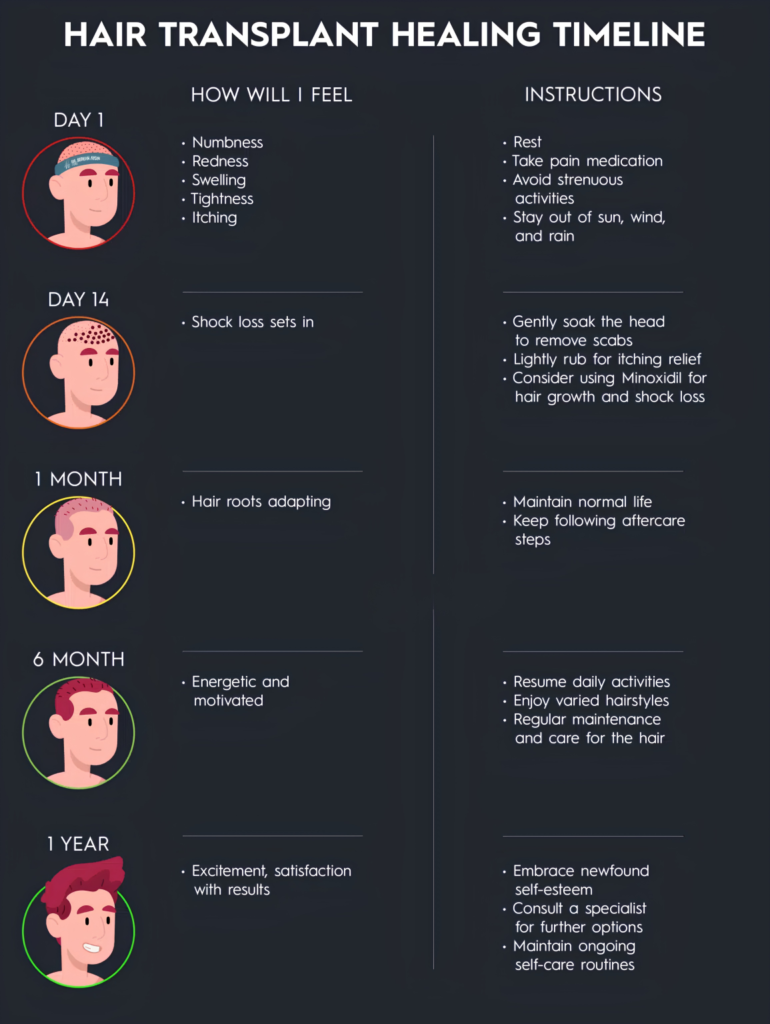
Hair Transplant Recovery Timeline: Week-by-Week Guide
Day 1–7: The Initial Recovery Period
During the first few days after a hair transplant, the scalp begins its natural healing process. It is normal to experience mild redness, sensitivity, swelling, or tightness around the treated area.
Small scabs may also develop around the transplanted hair follicles. These scabs are part of the healing process and usually disappear naturally within several days to two weeks.
During this stage, patients should:
- Avoid touching or scratching the transplanted area
- Follow the prescribed medication routine
- Sleep with the head slightly elevated to reduce swelling
- Avoid strenuous activities that may increase sweating
Proper care during the first few days helps protect the newly implanted follicles.
Day 7: Hair Week & Scab Removal
During the first week, the scalp continues to recover. The transplanted area may appear slightly red, and small crusts or scabs may remain around the implanted follicles.
Many patients worry when they notice changes in the appearance of their scalp. However, these signs are a normal part of recovery.
At this stage:
- The transplanted follicles are becoming more secure
- Swelling usually begins to decrease
- The scalp gradually becomes less sensitive
- Gentle washing may be introduced according to your surgeon’s instructions
Patients should continue following their clinic’s guidance to prevent unnecessary irritation.
Week 2–4: Scabs Disappear and Temporary Hair Shedding Begins
By the second to fourth week, most visible signs of the procedure begin to improve. The scabs usually fall away naturally, leaving the scalp looking more normal.
However, some patients may experience shock loss, where transplanted hairs temporarily fall out. This can be worrying, but it is a normal stage of the hair growth cycle.
The important point is that the hair follicles remain healthy beneath the scalp. New hair growth will gradually begin after the follicles enter the active growth phase.
Month 1–3: The Resting Phase
During the first three months, many patients experience a period where there appears to be little visible improvement.
This stage is known as the resting phase. Although new hair growth may not be obvious, important changes are happening beneath the scalp.
The transplanted follicles are:
- Adapting to their new location
- Developing stronger roots
- Preparing for new hair production
Patience is important during this stage because hair growth after transplantation takes time.
Month 3–6: Early Hair Growth Stage
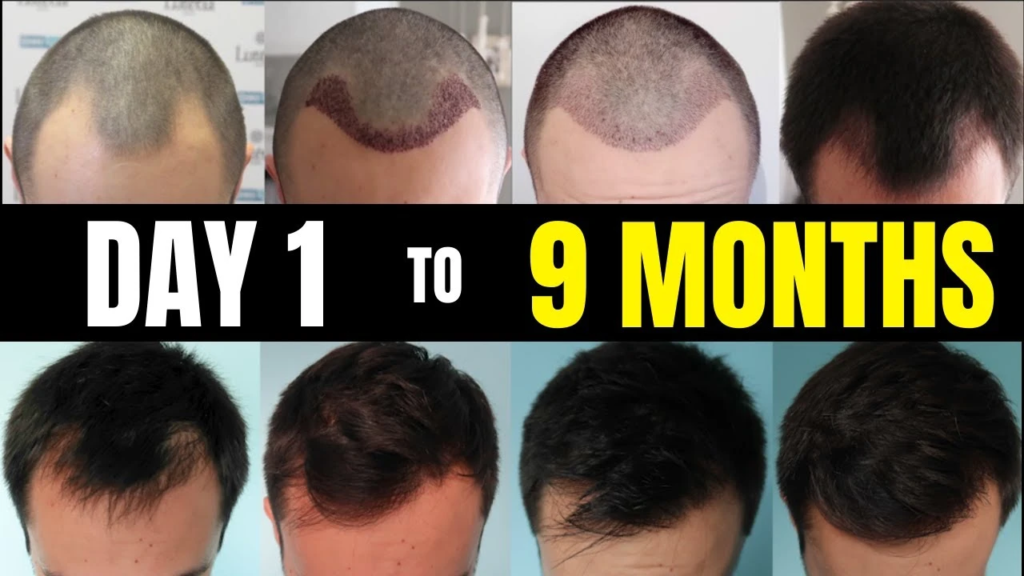
Between the third and sixth month, patients usually begin noticing the first signs of new hair growth.
The newly grown hairs may initially appear:
- Thin
- Fine
- Uneven in thickness
This is completely normal. Over time, the hair strands will gradually become thicker and stronger.
Many patients begin to see noticeable improvements in:
- Hair density
- Hairline appearance
- Overall scalp coverage
Month 6–12: Visible Hair Improvement
From six months onwards, hair growth becomes more noticeable. The transplanted hairs continue to mature, becoming thicker and more natural-looking.
During this period:
- Hair density improves
- Hair texture becomes stronger
- The hairline starts looking more natural
Most patients experience significant improvement within this timeframe, although results can continue developing beyond one year.
Month 12–18: Final Hair Transplant Results
The final stage of the hair transplant recovery timeline usually occurs between 12 and 18 months after the procedure.
At this point, transplanted hair follicles have reached their full growth potential. The hair should appear:
- Fuller
- Thicker
- More natural
- Easier to style
The final outcome depends on several factors, including:
- Quality of donor hair
- Number of transplanted grafts
- Individual healing ability
- Following proper aftercare instructions
How To Support Hair Transplant Recovery
Following the correct aftercare routine can help protect your results and support healthy hair growth.
- Follow Your Doctor’s Instructions
Your doctor will provide specific guidance on washing, medication, and daily activities. Following these instructions is one of the most important parts of recovery.
- Avoid Physical Stress During Early Recovery
Heavy exercise and activities that cause excessive sweating should be avoided during the first 2 week after hair transplant procedure.
- Maintain a Healthy Lifestyle
A balanced diet, adequate hydration, and good general health can support the body’s natural healing process.
- Be Patient With Hair Growth
Hair transplant results do not appear overnight. The follicles require time to produce new hair naturally.
Common Concerns After Hair Transplant Surgery
Is Hair Shedding After A Hair Transplant Normal?
Yes. Temporary shedding is a common part of the recovery process. The transplanted follicles remain inside the scalp and can produce new hair after the resting phase.
How Long Does Hair Transplant Recovery Take?
Most patients recover physically within 7–14 days. However, complete hair growth and final results usually take around 12–18 months.
Can I Return to Work After a Hair Transplant?
Many patients return to work within a few days, depending on their job and personal comfort level. Jobs involving physical activity may require a longer recovery period. Absolute rest for first 3 days, and only light work from day 4-7 is recommended.
When Can I Wash My Hair Normally?
The timing depends on your surgeon’s instructions. Most patients can gradually return to normal washing routines after the initial healing period.
Frequently Asked Questions (FAQ)
How long does it take for transplanted hair to grow?
New hair growth usually begins around the third month after surgery, with more noticeable results appearing between six and twelve months.
Will transplanted hair look natural?
Yes. When performed correctly, transplanted hair grows naturally because the follicles are taken from your own donor area.
Does hair transplant recovery hurt?
Most patients experience mild discomfort rather than significant pain. Any discomfort can usually be managed with medication recommended by your doctor.
Are hair transplant results permanent?
Transplanted hair follicles are generally resistant to hair loss because they come from areas that are less affected by male pattern baldness.
Conclusion
A successful hair transplant requires both a skilled procedure and proper recovery care. Understanding the hair transplant recovery timeline helps patients know what to expect and remain confident throughout the healing journey.
Although visible results take time, patience and proper aftercare allow transplanted follicles to develop into natural-looking, long-lasting hair growth.
If you are considering a hair transplant, consulting an experienced hair restoration specialist can help you understand your options and create a personalised treatment plan.
Book a Consultation
If you are concerned about hair thinning or hair loss, Advanced Hair Transplant Specialist offers professional consultations to help you understand your options.
Our team is committed to providing suitable hair restoration solutions for both men and women in Malaysia.
DON'T WAIT. GET HELP TODAY!
Hair loss is a frustrating problem for millions of men and women. Factors such as diet, stress, and medications can lead to hair loss but genes can also play an important role in male pattern baldness.
The sooner you address the symptoms of hair loss, the more likely you are to prevent irreversible damage. Contact us now to get free consultation from our Hair Transplant Specialist Doctor.